

You’re in Missouri, and the plan is to sell a home even if it’s your first time. One of the offers that may seem promising is the contingency offer. On paper, it may seem like it’s one of those official but pending kinds of offers. So the iron is hot, but when is the “strike” going to happen?
Here is the big surprise. “Contingent” is more of an “escape hatch” for the buyer. Further proof that such offers are shaky and nothing is ever guaranteed. Another thing to be aware of is that when you take your house off the market, you won’t show it to other buyers, despite having no guarantee that the deal might be done. While the buyer wrestles with a decision, you’re placing yourself at an even greater risk.
Nonetheless, avoiding contingent offers will always be the better option moving forward. You’re going to learn things about “exit doors” as well as what you need to do to shed that “back on the market” stigma that does more damage than you thought was possible. You’re going to deal with a lot of tire-kickers in the real estate world. So, you might as well prepare yourself for one of those situations where someone will be indecisive about a deal. You don’t have time for that.
What does contingent mean when selling a house? It means that you, the seller, accepted an offer. However, the deal is done based on certain conditions or contingencies. There may be a kick-out close or a no-show. Or it might be something else.
As mentioned, contingencies are just a fancy word for “exit doors”. There are three of them that a buyer can take advantage of at any moment. They’ll misdirect you with the potential excitement of a done deal, but it can go the other way for whatever reason. It may be legitimate or an excuse. You just never know, right?
So let’s take a look at these three exit doors that buyers can leverage. You are about to develop a sixth sense of what it looks like and how such things play out. Let’s take a look at the following:
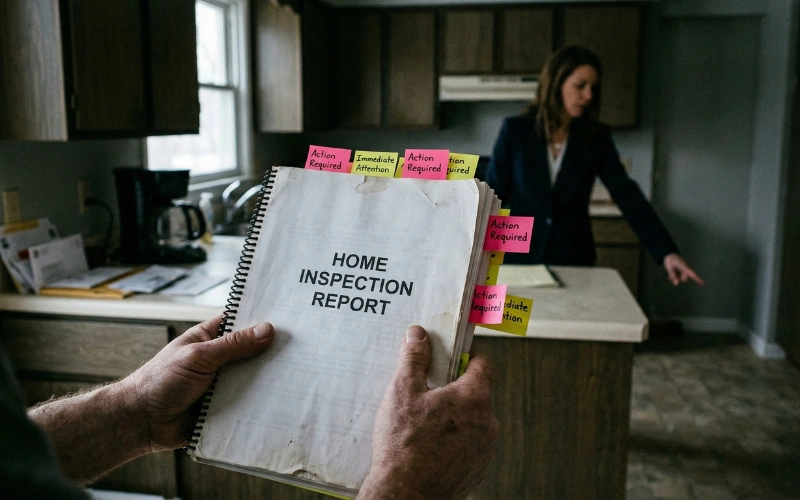
The inspection contingency is one of the tried and true classic “exit doors”. The way it works is this: first, they’ll ask for a price that’s close to what you, the seller, might be asking for. From there, the home inspection report will list the minor issues that exist. After that, they may demand credits or a price cut, whichever might work to their advantage. Normally, this happens after a buyer signs the contract and decides to renegotiate. They’ll demand that you put in more money for repairs so they are satisfied. Ask any real estate agent we know, and they’ll tell you that this is a headache.
Now, you can refuse the offer so they can walk away clean with their earnest money. Then it’s a hostage situation that may be difficult for you to get out of.
But here’s the issue on your end, you took your house off the market weeks ago with the assumption that the deal is dang near done. On the contrary, you fell for the bait and switch that can frustrate many home sellers. The damage can certainly be enough to cause you to fall into a much deeper financial trench when it comes time to re-list the house.
A potential buyer may be “pre-approved”. But here’s another big surprise that can be a rude awakening for sellers: they STILL can fall short of securing a loan. That’s what happens with the financing contingency. It may seem like one of those rare, once-in-a-blue-moon sort of happenings. Yet, it creates an escape hatch for the buyer where they can formulate the perfect excuse and walk away with their earnest money intact in the process. For example, the deal can collapse due to situations like job changes, appraisal gaps (also known as the appraisal contingency), an increase in debt, and drops in credit scores.
When the financial aspect falls through, that kills a deal fast. You will be back to square one with nothing to show for it, 30 to 45 days later. If that isn’t a pain you cannot imagine dealing with, then it’s hard to think what else can come to mind in such situations.
If you are wondering if there’s an exit door that presents itself as the “riskiest” for sellers, the home sale contingencies are it. The sale depends on the buyer selling their own home first. They too are in a similar situation as you are selling the house. They are also at risk of facing the potential of a deal collapsing.
And this is where the domino effect comes into play. When their deal fails, so does yours, albeit instantly. The reason is that you’re tying yourself to a timeline that you have no control over whatsoever. After all, it’s their house that they’re selling and not yours. They may face issues of their own, such as a home inspection contingency, title contingency, or even a settlement contingency. In other words, things will drag out with no predictable closing date in sight. That alone will leave you holding an empty bag.
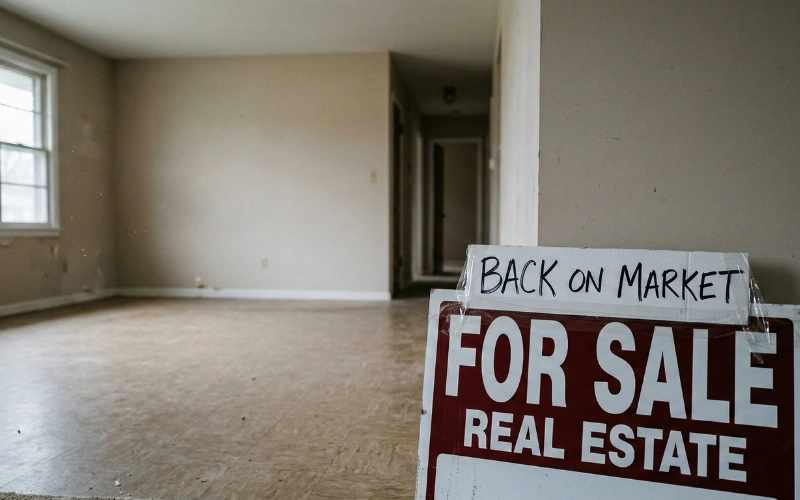
If a contingent contract fails, the home is back on the market. You think no one will notice the aftereffects of a failed deal, right? Well, that’s where things can get quite painful for you once you’ve returned to the MLS systems. Because buyers will notice this, especially the ones who are keen and watch the local housing markets like eagles and their next meal.
When they notice your house is “back on the market”, they begin to ask themselves questions. For example, they might be asking questions such as:
The answers to these questions might all be a “no”, but that doesn’t mean much. Perception still matters in every real estate sale ever done. As a seller, you may receive offers that are way lower this time around. We’re talking lowball offers. The reason? Buyers will assume that something may be wrong with the home. The most risk-averse will have alarm bells ringing in their head to the point where they’ll have no choice but to say “no” to shut them off.
We didn’t even point out the worst of the whole thing. A failed contingent deal can cost you thousands. You have the listing fees, repeat inspections to see what actually happened, and the work. It’s a costly lesson that proves contingency deals aren’t what they’re cracked up to be in Missouri or anywhere else.
Unlike traditional buyers, Huck Buys Homes operates differently. We don’t use any exit doors. That’s because we offer the best non-contingent alternative there is, a good old-fashioned cash offer. We also remove all kinds of risks, as well including the inspection and financing risks. Let’s dig a bit deeper into those, so you know what we mean:
If you sell your house as-is in Missouri, cash buyers will be more interested. You don’t need to worry about repair demands on the part of the buyer. Nor do you need to worry about surprise credits or renegotiation after inspections, either. We will handle that after that fact, so you don’t have to do a thing.
Since there is no lender involved in the deal, you don’t need to worry about appraisal issues, loan underwriting delays, or last-minute denials. You simply get a cash offer at Blue Springs or wherever else in Missouri you are selling your home.
If your home is listed on the Missouri housing market, you may be expecting a traditional buyer to come along. However, if you are pressed for time, cash buyers will be your best friend here since the financing risk will be less existent.
A non-contingent offer means that the agreed price is the price you’ll receive at closing. The timeline is predictable, making it easier to plan your move. If you’re someone exploring options, Huck Buys Homes could be the best option if you’re planning on selling the house as is. As one of the best home buyers in Kansas City and the nearby communities, we are not the kind of buyers who will run away because of “uncertainties” or any kind of excuses traditional buyers might give you.
By understanding the listing statuses, you’ll have a better idea of how close you are to a done deal. The statuses we’ll look at are contingent, pending, and sold. Here’s a look at each one what they actually mean:
If the uncertainty of contingencies is something you want to avoid, you have two options: one, either you do nothing and get stuck in the never-ending cycle of tire-kicking buyers that will use exit doors. Or you can contact Huck Buys Homes and get a guaranteed offer as soon as possible. You control how much risk you can accept. Instead of a “maybe”, a guaranteed offer that can be done as soon as today could be the best way forward. Value your home with experts who know the real ugly truths about the housing market and work with Huck Buys Homes.
Contingent offers don’t mean a done deal. It’s more of a holding pattern than anything else. What it really is on the buyer’s end is flexibility, while placing a lot of unfair risk on you. In that situation, everything needs to go perfectly in order for the deal to be done. However, contingencies can fail, and everything falls by the wayside. You lose time, momentum, money, and negotiating power.
Don’t let that be you, or any other Missouri homeseller, for that matter. A non-contingent sale takes away all the guesswork that keeps you constantly on edge. It also shortens the timeline and allows you to move forward with confidence. If you want speed, clarity, and predictability, contact Huck Buys Homes, and we’ll make sure you get the best deal possible for your home as is.