

Kansas Eviction Process: What Kansas City Landlords Need to Know

  • August 25, 2026
Share :
Kansas Eviction Process

You have just taped a 3-day notice to pay or quit on your tenant’s door in Kansas City, Kansas, and now you are standing in the driveway wondering what actually happens next. Months of missed rent are already eating at you, neighbors are texting about noise, and you are nervous about doing anything that could get you in trouble with a judge.

In Kansas, eviction is a formal court process with clear steps: proper written notice, filing a case, serving the tenant, going to a hearing, and, if you win, a sheriff-supervised lockout. It is not something you can shortcut by changing the locks or shutting off utilities.

This article is general information for Kansas landlords, not legal advice, and judges always have discretion in how they handle a case. If you are in a gray area or facing a contested situation, it is wise to talk with a Kansas attorney.

Kansas Eviction Process Basics for Kansas City Landlords

Eviction in Kansas is a court-based legal process governed by state law. You cannot legally handle it yourself by changing locks, cutting power, or moving a tenant’s belongings out — you must go through the courts to regain possession of the property.

Eviction is the legal process a landlord uses to regain possession of a rental when a tenant breaches the lease or stays after the lease ends, and in Kansas it has to run through the district court from start to finish.

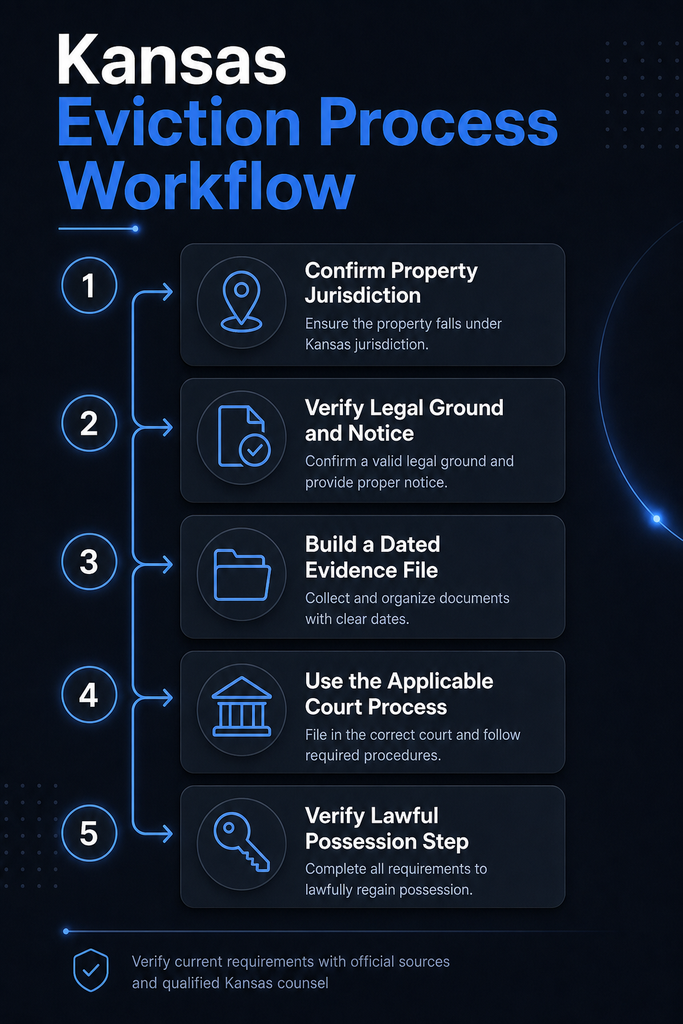
The Kansas eviction process usually follows these stages:

  1. Required, properly served notice – For nonpayment of rent, that often means a 3-day notice to pay or quit under Kan. Stat. § 58-2564(b). For other lease violations or ending a month-to-month tenancy, different notices apply.
  2. Filing a forcible detainer action – If the tenant does not pay, cure the violation, or move out, the landlord files a forcible detainer case in Kansas district court under chapter 61.
  3. Service of the court summons – The tenant must be served with the petition and a summons, usually handled by the sheriff, a process server, or as local rules allow.
  4. Court hearing and judgment – Both sides can tell their story. If the judge rules for the landlord, the court enters a judgment for possession and possibly money for unpaid rent and fees.
  5. Writ of restitution – If the tenant still will not move after judgment, the landlord requests a writ of restitution — the court order authorizing the sheriff to physically return possession.
  6. Sheriff-supervised lockout – The sheriff comes to the property, oversees the removal of people and belongings, and supervises the lock change. Kansas courts are clear that landlords cannot do this themselves without a court order.

Important note for Kansas City landlords: You may own rentals on both sides of the state line, but Kansas and Missouri have different landlord-tenant laws and court procedures. Everything in this article is about Kansas law.
kansas eviction process

Legal Reasons You Can Evict a Tenant in Kansas

Kansas courts look for legitimate grounds, not just frustration. Before the end of a fixed-term lease, you generally need a legally valid cause to evict, and even with a month-to-month tenant you still have to follow proper notice rules.

  • Nonpayment of rent – Kansas law allows you to serve a 3-day notice to pay or quit under Kan. Stat. § 58-2564(b). If they do not pay in full within those three days, you can move toward filing a case.
  • Material lease violations – Serious or repeated violations such as unauthorized occupants, unauthorized pets, significant property damage, or chronic late payments after written warnings.
  • Illegal activity – Evidence of certain illegal activity on or near the property, such as drug dealing or serious criminal activity. These cases are sensitive and should be handled carefully with legal counsel.
  • Holding over after the lease ends – If a lease has ended and the tenant stays without permission or a new agreement, you can terminate the tenancy and proceed to eviction if they do not leave after proper notice.
  • Ending a month-to-month tenancy – Kansas law allows either party to terminate by giving a 30-day written notice under Kan. § 58-2570(b). If the tenant does not leave after that notice expires, eviction can follow.
  • Other substantial breaches spelled out in the lease – If your lease clearly lists certain behaviors as causes for termination and those align with Kansas law, those can support an eviction.

You cannot evict someone in Kansas for reasons that amount to discrimination based on protected characteristics, or as retaliation because they called code enforcement, asked for repairs, or otherwise exercised their legal rights. 

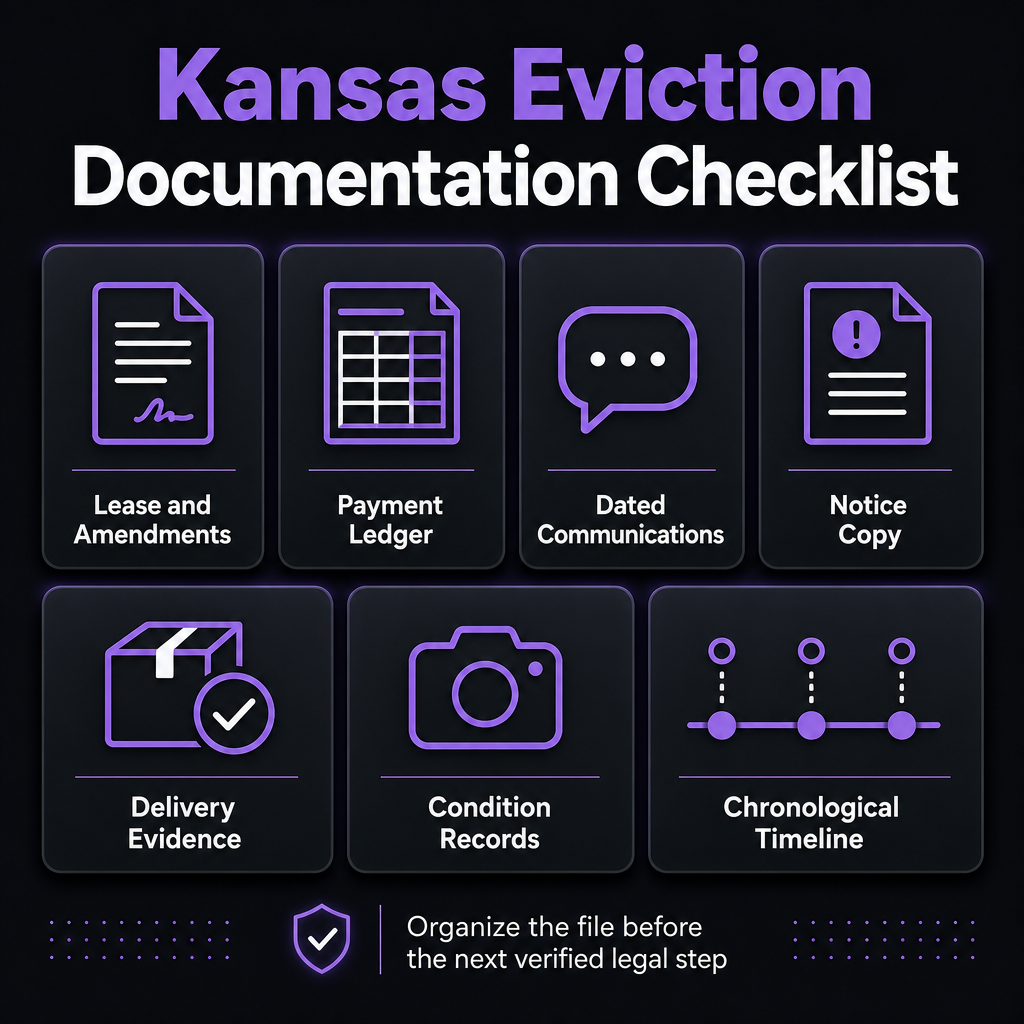
Documentation matters more than most landlords expect — payment ledgers, photos of damage, copies of prior warning letters, and written neighbor complaints all help you show the court that your reason is real.

Kansas Eviction Notices and How Many Days Tenants Get

A Kansas eviction notice is a formal written document telling the tenant what is wrong, what they must do to fix it or move out, and how many days they have before you are allowed to file an eviction case in court.

Notice typeReason usedMinimum daysEveryday example
3-Day Notice to Pay or QuitTenant has not paid rent when due3 days to pay in full or move before you may file (Kan. Stat. § 58-2564(b))Tenant is behind on rent in a Wyandotte County duplex
14/30-Day Notice to Cure or QuitSerious lease violations that might be cured~14 days to cure; lease ends after ~30 days if not curedTenant has unauthorized roommate and dog after prior written warnings
30-Day Notice to Terminate Month-to-MonthEnding a month-to-month tenancy without cause30 days’ written notice by either party (Kan. § 58-2570(b))Tenant pays month to month and you decide to stop renting

A good notice in Kansas typically includes: names of tenants on the lease, the property address, a clear specific reason, the exact number of days to pay/cure/move, and what happens if they do nothing.

Step-by-Step Kansas Eviction Process: From Notice to Lockout

  1. Serve the proper Kansas eviction notice – Correct days and proper service are critical.
  2. Wait through the notice period – Document what happens. Keep a simple log and save every payment record.
  3. File a forcible detainer action in district court – Use the official Kansas Judicial Council Petition for Eviction form, which spells out what information the court needs.
  4. Court issues a summons and the tenant is served – Proper service is another area where small technicalities can make or break the case.
  5. Tenant can respond – They can pay up, move out, reach an agreement, file an answer, or raise defenses such as defective notice, retaliation, discrimination, or habitability issues.
  6. Court hearing and judgment – Bring your lease, payment ledger, copies of notices, and any supporting photos or documents. The judge can grant possession, deny the eviction, or continue the case.
  7. Request a writ of restitution if you win – A writ of restitution is the court’s written order that tells the sheriff to carry out the physical part of the eviction by removing occupants and restoring possession to the landlord.
  8. Sheriff lockout – The sheriff schedules a date, supervises the lock change, and oversees removal of anyone still inside. Self-help lockouts are not allowed.
  9. Handle belongings left behind – Kansas law gives landlords a process under Kan. Stat. Ann. § 58-2565, including a 15-day publication period and ability to dispose after 30 days if items remain unclaimed.

From filing to hearing, an uncontested eviction case can sometimes be scheduled within a few weeks, but backed-up court calendars or tenants who actively defend the case can stretch things out for months.

How Long the Kansas Eviction Process Usually Takes

StageTypical time frameWhat is happening
Notice period3 days for nonpayment; ~30 days for month-to-month terminationTenant has a last chance to pay, fix the issue, or move
Filing to hearingOften a few weeks, depending on county calendarCourt sets hearing date, summons issued and served
Judgment to sheriff lockoutSometimes another week or moreCourt issues writ; sheriff schedules physical lockout
Handling belongings after lockout15-day publication period; 30 days before disposal under § 58-2565Storing or managing abandoned tenant property

Several things can stretch an eviction from weeks into months:

  • The tenant hires legal aid and raises multiple defenses
  • The court calendar is backed up or a judge continues the hearing
  • There are service problems and the tenant has to be re-served
  • You have to restart due to a defective notice or paperwork issue

Timing can also look different between Johnson County, Wyandotte County, and more rural Kansas counties — the law is statewide, but the practical pace is local.
kansas eviction process

What It Really Costs to Evict a Tenant in Kansas

Cost categoryWhat it covers
Court filing feeRequired to open the eviction case; amounts set by courts and can change
Service of summonsPayment to sheriff or process server to deliver petition and summons
Service of writ of restitutionFees associated with issuing and serving the writ
Locksmith and lock changesCharges from the locksmith who meets the sheriff on lockout day
Storage or disposal of belongingsCosts to move, store, and dispose of tenant property under § 58-2565
Attorney feesIf you choose to hire one, especially in contested or multi-unit cases

On top of those direct costs, there are softer costs that do not show up on an invoice:

  • Months of unpaid rent while you work through notice, court, and lockout
  • Utilities, insurance, and property taxes you keep paying during the process
  • Extra damage or cleaning after a hard move-out
  • Your own hours spent tracking notices, attending hearings, and coordinating logistics

Even when a judge awards you a money judgment for unpaid rent and fees, collecting from a tenant with limited income or assets is often difficult.

Tenant Defenses, Protections, and Risks of Getting Eviction Wrong

Tenants in Kansas have defenses and protections they can raise, and courts take them seriously:

  • Defective notice – Wrong number of days, wrong reason, or improper delivery can get your case thrown out
  • Retaliation – Eviction attempts that come soon after a tenant calls code enforcement or requests essential repairs can be challenged
  • Discrimination – Tenants can raise defenses based on protected characteristics under federal and state fair housing laws
  • Habitability issues – Serious repair problems like lack of heat, unsafe wiring, or major leaks can become part of a tenant’s defense
  • Illegal self-help actions – Changing locks, shutting off utilities, or removing belongings without a court order are not permitted and can expose you to liability

If a judge finds that you mishandled notices, retaliated, discriminated, or tried self-help, consequences can include dismissal of your case, having to start over from the beginning, and potential liability or penalties.

When Selling Might Be Smarter Than Evicting

There is no shame in deciding you are done. Here are a few situations where selling a house can make more sense than grinding through another Kansas eviction:

  • An older Kansas City, KS house that will need major repairs after the tenant leaves – A hard move-out can reveal everything at once, and continuing with eviction may mean more time without rent followed by a rehab you do not want.
  • A remote or aging landlord juggling several KC rentals – Coordinating court dates from afar is stressful and expensive.
  • Behind on mortgage or taxes with another multi-month eviction ahead – Selling now to pay everything off and reset your finances can be the safer move.
  • A small inherited property after a rough tenancy – Selling as-is lets everyone move on without arguing about who pays for the rehab.

In each of these scenarios, you have two basic paths:

  • Finish the eviction – Keep paying holding costs, go to court, hope notices and service hold up, and then take on repairs, cleaning, and re-leasing.
  • Sell now, even with a problem tenant – Work with a local Kansas City cash buyer who is comfortable evaluating a property with a nonpaying or difficult tenant in place or mid-eviction.

Huck Buys Homes is a Kansas City based direct cash home buyer serving both the Kansas and Missouri sides of the metro. Existing leases and court orders still have to be honored, occupants should be treated respectfully, and local title and legal review should be part of a clean closing.

Why a Cash Buyer Makes the Kansas Eviction Process Easier

Cash buyers like Huck Buys Homes do not need lender approval, so they are not waiting on bank underwriting or appraisals that could be derailed by a nonpaying tenant. 

Selling to a local cash buyer can sidestep many of the friction points in the Kansas eviction process:

  • No repair or rehab project before you can sell
  • No waiting on lender approval or appraisals
  • No repair negotiations with a traditional buyer
  • No commissions
  • No seller-paid closing costs in most deals

Huck’s Guaranteed Offer program is all-cash, with no showings, no public open houses, and the ability to close in as little as seven days in many cases. 

If you want to talk through whether finishing an eviction or selling now makes more sense for your Kansas City property, reach out to Huck Buys Homes for a no-pressure local cash offer.

FAQs: Kansas Eviction Process

How long does eviction take in Kansas?

A straightforward eviction can sometimes move from notice to lockout in a matter of weeks, but it is common for the full process to stretch into a few months once you factor in court scheduling and delays.

Can a landlord evict a tenant without going to court in Kansas?

No. Self-help actions like changing the locks, shutting off utilities, or removing belongings without a court order are not allowed in Kansas.

What are valid reasons for eviction in Kansas? V

alid reasons include nonpayment of rent, serious or repeated lease violations, certain illegal activity, and staying in the property after a lease ends without permission. Discrimination and retaliation are not valid reasons.

Should I hire an attorney for a Kansas eviction case?

Many landlords handle simple, uncontested nonpayment evictions themselves. If there is a lot at stake, multiple units involved, possible discrimination or retaliation issues, or a tenant who will push back hard, hiring an attorney can be a smart investment.

Do I have to finish eviction before selling my Kansas City rental to Huck Buys Homes?

No. Huck can often evaluate properties as-is with nonpaying or difficult tenants in place, or while an eviction case is already in progress, and then work through the remaining legal steps after closing.

Will an ongoing eviction or bad tenant scare off a cash buyer?

A local cash buyer like Huck Buys Homes is used to evaluating properties with ongoing tenant issues. Huck evaluates the situation, prices the risk into the offer, and works with local title companies and attorneys to close safely for everyone involved.

Can a cash buyer close on my Kansas property even if the court process is taking longer than expected?

In many cases, yes. Because a cash buyer does not rely on bank underwriting or appraisals, closing timelines can often be arranged around an ongoing Kansas court process, subject to title and legal review. Huck can close in as little as seven days on many Kansas City properties.

Request Your FREE Cash Offer Today!

Fill out the form below or call us at 816-670-3480 for your FREE cash offer!