

If you just opened a Jackson County assessment notice and the number is bigger than you expected, you’re probably doing quick mental math on your mortgage and everything else you have going on right now.
In plain terms, the recent Jackson County property tax assessment increase is the county catching values up to what homes have been selling for across Kansas City, combined with a new rule from the Missouri State Tax Commission May 2025 order that caps most 2025 residential assessment increases at 15%, with exceptions for new construction or major changes to a property.
So your next bill is not automatically 15% higher. It comes from the assessed value the county puts on your house, multiplied by all local tax levies, minus any caps or credits you qualify for.
Jackson County is in a 2025 reassessment year, most residential assessment increases for 2025 are capped at 15% by the Missouri State Tax Commission’s May 2025 order, and those 2025 values will be used to calculate 2026 tax bills. Your actual bill can still move more or less than the assessment change because it depends on local tax levies and any credits you qualify for.
The county sets the value, local governments set the rates, and your bill is where those two meet.
How the assessment system works
| Term | What It Means |
| Appraised or market value | What the county thinks your property is worth in the current market |
| Assessed value | The taxable portion of that value |
| Tax rate or levies | The combined rates set by your city, school district, county, and other local bodies |
Missouri reassesses real property on a two-year cycle. For Jackson County, 2025 is a reassessment year with new values set for properties, and those 2025 values are used for 2026 tax bills. Absent changes to a specific property, the next countywide reassessment is planned for 2027.
The 15% cap
For 2025, the Missouri State Tax Commission ordered that most residential assessment increases are capped at 15% compared with the prior cycle, with exceptions like new construction. This cap is meant to blunt the sharpest spikes, not freeze everyone’s taxes in place. That means:
Why values jumped so much in Kansas City neighborhoods
Across many Kansas City neighborhoods, including Raytown, Independence, and parts of the Jackson County urban core, home prices climbed while some assessments lagged behind. A reassessment catching up can mean catch-up jumps for underassessed properties and bigger swings in faster-appreciating areas. The cap helps, but if your place was significantly underassessed, even a capped increase can feel heavy.
Owner-occupants vs. small landlords
| Owner-occupant | Small landlord |
| Worried about escrow going up and what that does to the monthly payment | Every assessment increase stacks across all owned properties |
| Higher taxes may squeeze the household budget | Net operating income shrinks |
| Usually not passing that cost on to anyone | Reconsidering rent levels and whether properties still make sense |
We regularly talk with Kansas City owners who look at these jumps and decide they would rather not fight the number at all. For some, that’s when selling becomes part of the conversation, and a local cash buyer can underwrite the property with the new tax reality already baked in.
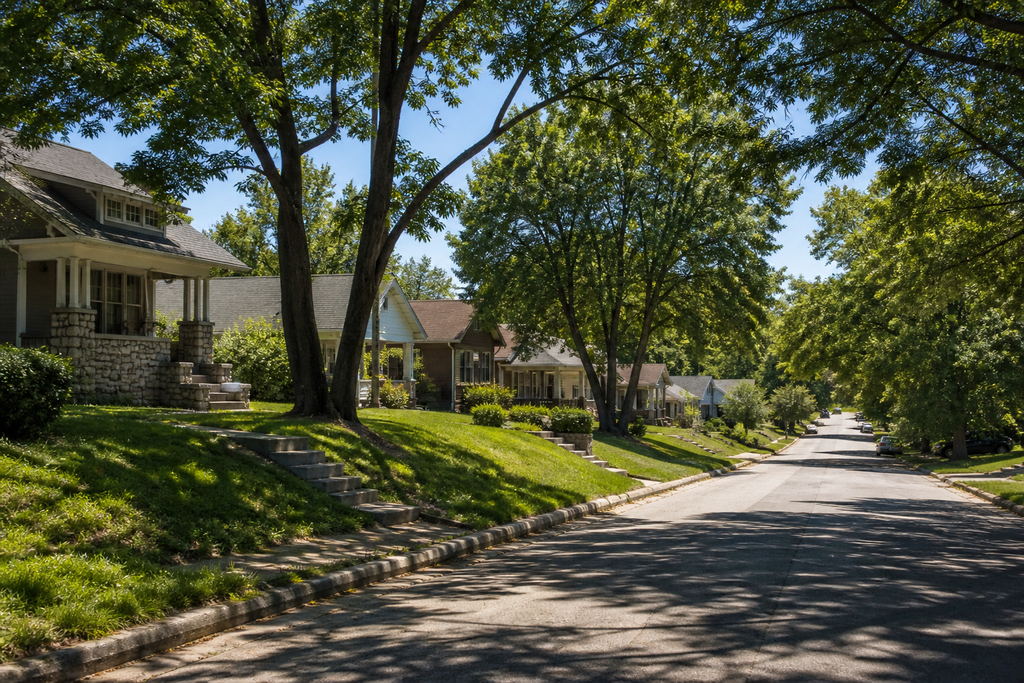
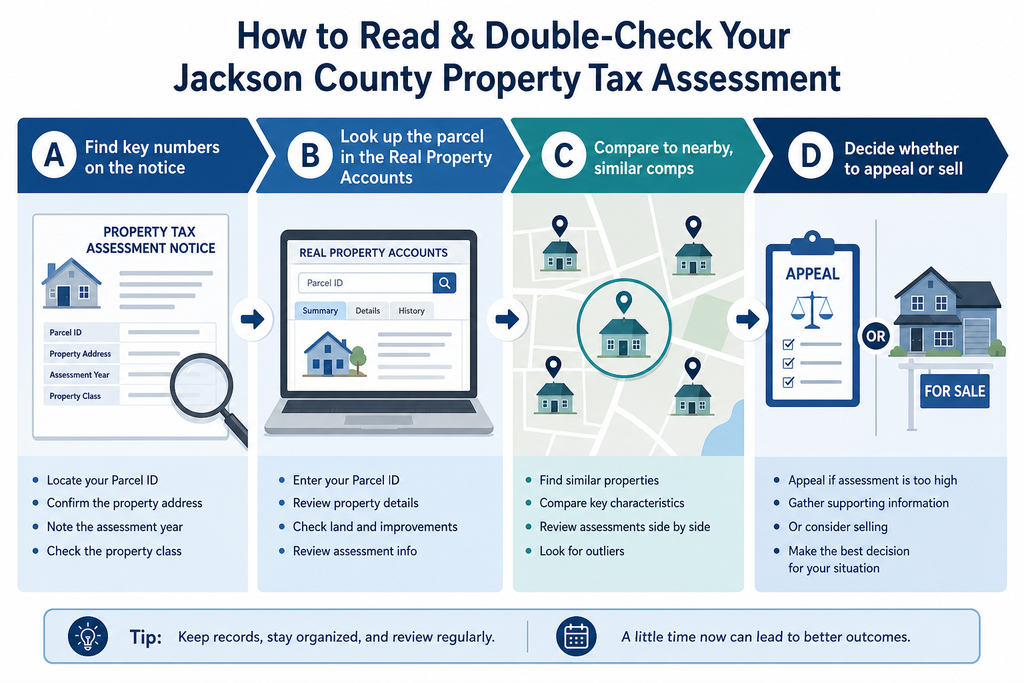
You can usually tell if your assessment is in the right ballpark by checking a few key fields on your notice, confirming your property details in the county’s Real Property Accounts search, and comparing the new value to recent nearby sales.
1. Find the key numbers on your notice
Grab your assessment notice and look for:
A simple rule of thumb: if the new appraised value is much higher than similar homes have sold for near you, it is worth a closer look.
2. Use the Real Property Accounts search
Enter your parcel number or address, confirm the record is your house, and check square footage, bedroom and bathroom count, year built, and land use. A data error here can help support an appeal.
3. Compare to recent neighborhood sales
Pull up recent sales for similar homes nearby: similar size, style, age, condition, and close location. Be cautious about a flipped house with brand-new everything or one-off outliers. If comparable homes are selling near the county’s value, a larger jump can still be normal after years of underassessment.
4. Decide whether the jump is explainable or suspicious
Probably normal:
Worth a closer look:
5. Landlords: build a simple portfolio view
A quick spreadsheet with property address, last cycle’s and current values, and notes on condition or repairs helps you see which properties took the biggest hits.
If your assessment looks too high, you can appeal it, typically starting with an informal review and then a formal Board of Equalization appeal generally due around the second Monday in July, with further options at the Missouri State Tax Commission after that. A strong appeal isn’t about arguing the jump feels unfair. It’s about showing, with documents, that the value is wrong.
Appeal paths
What evidence actually helps
Filing a BOE appeal
Common pitfalls: missing the deadline, relying only on emotion instead of proof, bringing comps that don’t match, and waiting until the last week to start.
For some Kansas City owners, it can be smart to start an appeal but also explore selling. A direct cash buyer underwrites the taxes and any future appeal risk themselves, letting you step away from the fight entirely.
A higher Jackson County assessment does not translate dollar-for-dollar into your tax bill. Your final bill is the assessed value multiplied by local levies minus any caps and credits, and for 2025 the assessment increase itself is capped at 15%, even though the total bill can still move more or less than that depending on tax rates and relief programs.
The 15% cap limits most residential assessment increases for 2025, but it doesn’t freeze the whole bill. For a homeowner on a fixed income, even a smaller tax increase can crowd out groceries or savings. For a landlord, the same increase repeats across each property and hits cash flow directly.
Whether you keep or sell, the key number to focus on is your net: your income after the new tax bill if you stay, or your sale price minus repairs, commissions, and closing costs if you sell. When we buy a house in Jackson County, we underwrite it with the current and expected tax burden already baked in.
There are relief paths that can soften the hit, falling into two buckets:
| Automatic | You Have to Request |
| The 15% cap on most 2025 residential assessment increases | Credits and relief programs, often for seniors or lower-income households |
| County-applied programmatic adjustments | Appeals and corrections through informal review, BOE, or the State Tax Commission |
The cap applies to assessments, not the total tax bill; levies and credits can still move the final amount, and exceptions include new construction. Relief programs usually require an application; they aren’t automatic just because your assessment went up.
In past cycles, large assessment jumps have led to lawsuits and discussions of settlements or refunds in local coverage. Treat casual dollar figures carefully unless they come from official sources.
If you own rentals or a small portfolio in Jackson County, higher assessments usually mean lower net operating income and tighter margins, which can change which properties you hold, improve, or sell.
How it hits a rental portfolio:
If appealing as an investor, use rent rolls and expense statements to show what the property truly supports, and prepare comps that match the physical condition and income profile of your rentals.
You might consider selling when a property is chro