

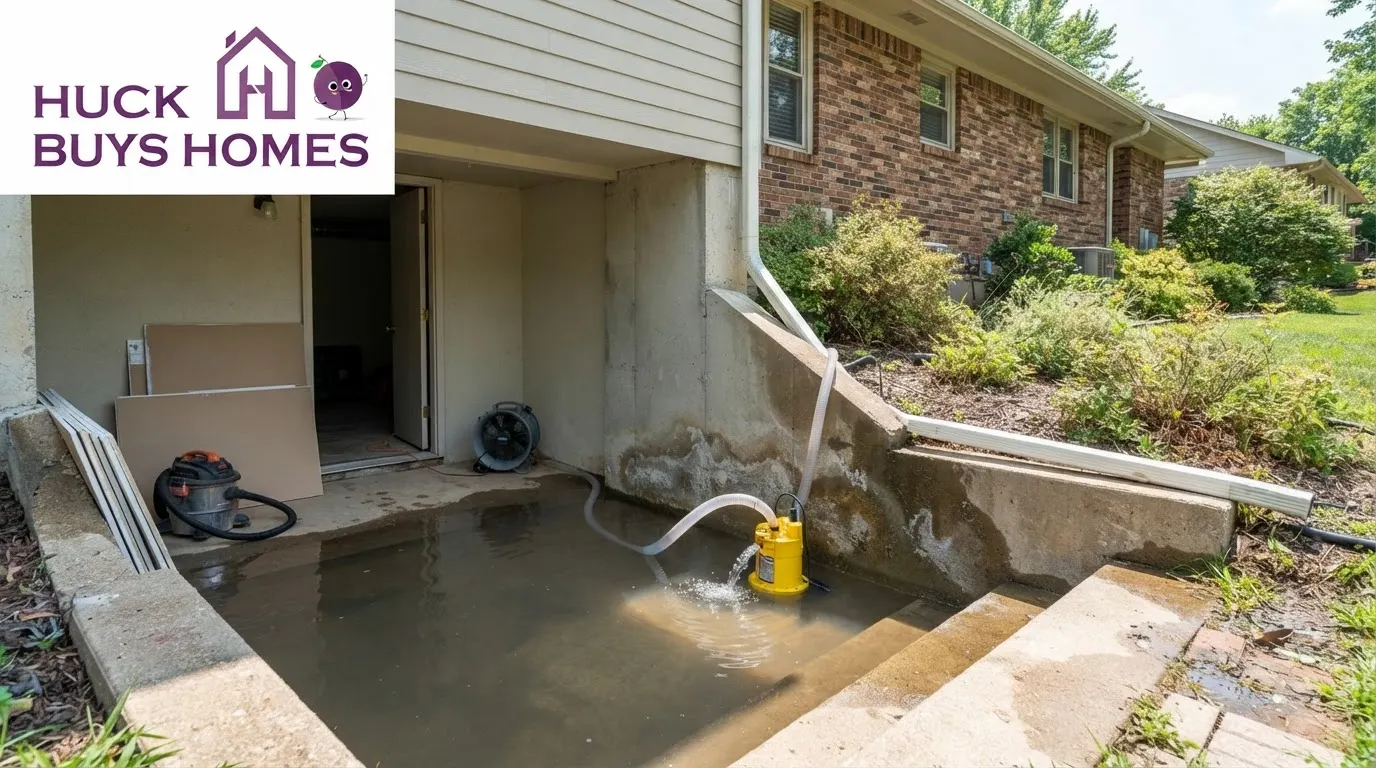
You walk downstairs, and your socks are wet before you even spot the water. That sinking feeling is familiar to a lot of Kansas City homeowners, especially after one of our region’s fast-moving thunderstorms rolls through. Basement flooding here isn’t rare, and it usually isn’t your fault — it’s a mix of stubborn clay soil, an aging stormwater system, and everyday wear on things like sump pumps and downspouts.
Let’s walk through this together: what to do in the first hour, how to dry things out safely, whether insurance is likely to help, what repairs really cost, and how to keep this from happening again. And if you’re standing in that basement right now wondering whether fixing everything is even worth it, we’ll get into that honestly too — including when selling your Kansas City house as-is might be the simpler path forward.
This isn’t a one-size-fits-all problem. A quarter-inch of water on a concrete slab is a very different situation than three inches soaking into finished drywall, carpet, and a furnace. So instead of a generic checklist, this guide breaks things down by what’s actually happening in your basement right now — and what a realistic next step looks like from here.
Kansas City sits on heavy clay soil, and clay holds water instead of draining it away quickly. When a storm dumps a few inches of rain fast, that soil gets saturated and pushes hard against your foundation walls. That buildup, known as hydrostatic pressure, is one of the biggest reasons basements flood here, even in houses without obvious cracks. It’s also why a basement can flood two or three times in a single wet spring, even after you’ve mopped up and dried out once already.
Recent local reporting on hidden flood damage after last year’s storms found that many homeowners didn’t realize how much water had crept into their basements until days later. Sewer and stormwater lines can also back up during intense rain, forcing water backward into your home instead of away from it.
| Common Cause | Why It Happens | Quick Fix to Consider |
| Heavy clay soil | Retains water and builds pressure against basement walls | Improve grading and drainage around the foundation |
| Sump pump failure | Power outages during storms shut pumps down | Add a battery-operated backup pump |
| Downspout runoff | Water discharges too close to the foundation | Extend downspouts 5–10 feet from the house |
| City stormwater backup | Storm sewers get overwhelmed by heavy rain | Ask a plumber about a backflow valve |
None of these causes are unusual for our area, and none of them mean your house has a fatal flaw. They’re simply things older Kansas City homes — and even some newer ones — deal with when the weather turns. Knowing which one caused your flood helps you decide what to fix first and whether the fix is a weekend project or something bigger. If more than one cause is stacking up at once, like a failed sump pump during a storm that’s also overwhelming the city’s sewer lines, the flooding tends to be worse and the cleanup takes longer.
Once you see water, don’t panic — but do move fast. Here’s the honest truth: the first hour matters more than almost anything else you’ll do today. Every extra hour water sits against drywall, carpet pad, or stored boxes is an hour closer to mold, warping, and a bigger repair bill.
• Cut the power safely. Switch off electricity to the basement at the breaker if you can reach it without stepping in standing water.
• Stay out of contaminated water. If there’s any chance sewer lines backed up, treat the water as unsafe and avoid direct contact.
• Pull out the bulk water fast. Use a shop vac, sump pump, or water extraction tool to clear standing water as quickly as possible.
• Document everything. Take photos and short videos before you move anything, and write down the date and time it happened.
• Call your insurance company early. Get a claim number on record and ask exactly what mitigation steps they expect from you.
If you’ve got a finished basement with a furnace, water heater, or electrical panel low to the ground, treat that area with extra caution. Standing water anywhere near mechanical equipment is a good reason to wait for a professional instead of wading in yourself.
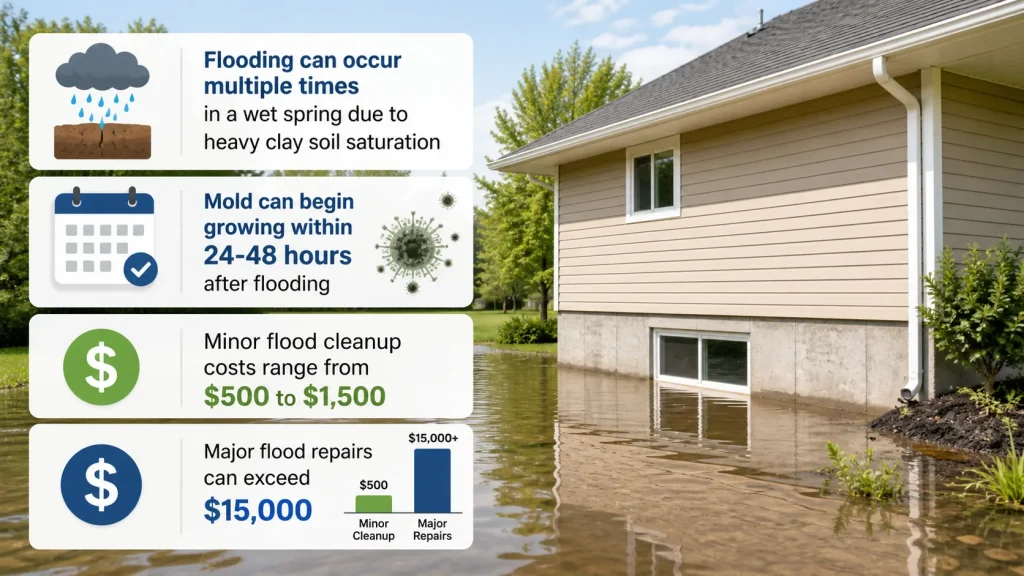
Mold doesn’t wait around. According to the EPA, mold can begin growing within 24–48 hours in damp conditions, so drying out your basement quickly isn’t optional. Most professional restoration crews follow established industry drying standards like IICRC S500 for a reason — rushed or partial drying almost always leads to bigger problems later.
• Set up heavy-duty fans and dehumidifiers, not just a single box fan in the corner.
• Pull up soaked carpet, pad, and area rugs so the subfloor underneath can actually dry.
• Disinfect hard surfaces like tile, concrete, and sealed wood once the bulk water is gone.
• Discard porous materials that stayed wet — soaked drywall, insulation, and cardboard usually can’t be saved.
• Watch for musty smells, warped baseboards, or dark spots in the days after — signs water reached further than you think.
Most folks in your spot can handle small, contained flooding themselves. But if water covered more than one room, soaked into finished walls, or sat for more than a day, it’s worth bringing in a restoration company instead of guessing.
Keep an eye on your basement for the next week or two even after everything looks dry. Moisture likes to hide behind baseboards, under vinyl flooring, and inside wall cavities, and a follow-up check with a moisture meter can catch problems your eyes and nose might miss.
Here’s the honest truth: most standard homeowners policies do not cover basement flooding caused by groundwater, heavy rain, or a sewer backup. Regular policies are built for sudden, accidental events like a burst pipe, not water that seeps or backs up from outside.
That distinction trips up a lot of Kansas City homeowners, because a burst pipe and a flooded basement can look almost identical once you’re standing in the water.
The source matters far more to your insurer than the damage itself, so don’t assume coverage either way until you’ve actually read the policy language. When in doubt, call your agent and describe exactly what happened before you file anything.
If you want coverage for this kind of flooding, you typically need a separate policy through the National Flood Insurance Program, or a sewer backup endorsement added to your existing policy. Check your declarations page or call your agent to see exactly what’s included before you assume you’re covered.
• Report any loss quickly and follow your insurer’s mitigation instructions closely.
• Photograph damage before and after cleanup, and save receipts for equipment or pros you hire.
• Ask specifically about sewer backup and sump pump failure endorsements — they’re often separate line items.
• If a claim is denied or feels like more trouble than it’s worth, know that repairing isn’t your only option.
If water damage has already left its mark, you can read more about selling a house with flood damage in Kansas City before deciding what’s next.
Costs add up fast once a contractor walks through your basement. A small, contained flood might mean a few hundred dollars in cleanup. A basement that flooded floor-to-wall with soaked drywall, insulation, and flooring can run well into five figures once demo, drying, and reconstruction are done.
Timelines add another layer most homeowners don’t expect. Mitigation and drying usually take the first few days, but full reconstruction — framing, drywall, paint, flooring — can stretch several weeks longer, especially if your contractor is also booked up from the same storm that flooded your basement. It’s worth asking any contractor for a written scope of work, not just a number, so you know exactly what you’re paying for before demo starts.
| Flood Severity | What’s Typically Involved | Rough Cost Range (estimate only) |
| Minor | Water extraction and drying on hard flooring only | $500 – $1,500 |
| Moderate | Extraction, drying, and partial drywall or carpet replacement | $3,000 – $10,000 |
| Major | Full demo, drying, rebuild, and possible foundation checks | $15,000 – $30,000+ |
These are rough, Midwest-style estimates, not a quote — real Kansas City bids depend on your home’s age, finish level, and how long water sat before cleanup started. Before committing to months of repairs, it’s worth comparing what a cash offer on your Kansas City house could look like instead.
Once the fans are packed up, most homeowners tell us the same thing: they never want to go through this again. Kansas City’s freeze-thaw winters and sudden downpours mean prevention really does pay off in the long run.
None of these fixes require a full renovation budget. Most are weekend projects or a single call to a plumber or landscaper, and tackling even two or three of them meaningfully lowers your odds of standing in a wet basement the next time a big storm rolls through.
• Extend downspouts 5 to 10 feet away from your foundation walls.
• Install a battery-operated backup sump pump so storms and power outages don’t leave you unprotected.
• Seal minor foundation cracks early using a proper waterproof sealant.
• Regrade your yard so soil slopes away from the house on every side.
• Have a contractor check your gutters, grading, and sump system once a year.
FOX4 KC’s guide to keeping homes dry covers several of these same fixes in more detail if you want a deeper local walkthrough.
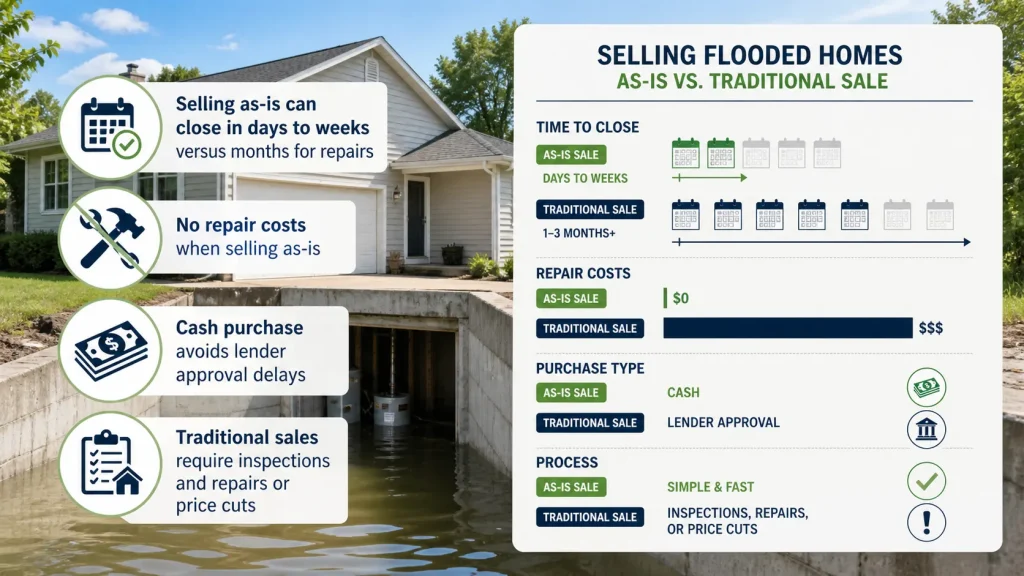
Sometimes repairing makes sense — light damage, decent insurance coverage, and plans to stay long-term. Other times, especially with repeat flooding, mold, or a rental sitting vacant, selling as-is is the less stressful, more financially sound choice.
A cash buyer like Huck Buys Homes looks at flood damage differently than a traditional buyer’s lender would. You don’t have to fix everything to move on — we factor in the cleanup, the mold, and the repairs upfront, so you’re not stuck financing a fix just to make a sale possible.
Think about what a traditional sale actually requires after flooding: an inspection that flags the damage, a lender that may hesitate to finance a house with recent water issues, and a buyer who wants repairs finished, or a price cut, before they’ll close. Selling as-is skips every one of those steps.
This isn’t about giving up on your house. It’s about being honest with yourself over the real cost, in time and money, of chasing a top-of-market sale versus taking a fair, straightforward offer and getting your life back on track sooner.
| Factor | Repairing | Selling As-Is |
| Timeline | Weeks to months of drying, demo, and rebuild | Often just days to a couple of weeks to close |
| Upfront cash | Repair costs, contractor deposits, possible loan | No repair costs — sold in current condition |
| Financing risk | Traditional buyers may struggle to get lender approval | Cash purchase, no lender approval needed |
| Stress level | Living around or near a construction zone | Walk away once you accept an offer |
If mold has taken hold, take a closer look at selling a house with mold in Kansas City to see how that process typically works. And if this is an inherited property nobody’s ready to renovate, our guide how long it takes to sell a house in Kansas City walks through those options, too.
What should I do first if my Kansas City basement floods?
Cut power safely, avoid contaminated water, and remove standing water quickly with a shop vac or sump pump. Document the damage with photos, then call your insurance company to start the claims process.
Does homeowners insurance cover basement flooding?
Usually not for groundwater or storm-driven flooding — that typically requires flood insurance or a sewer backup endorsement. Standard coverage for a burst pipe doesn’t apply the same way basement flooding does.
How long does it take to dry out a flooded basement?
Extraction and initial drying usually take a few days with proper fans and dehumidifiers. Full repairs, if needed, can take several weeks depending on how much drywall and flooring must be replaced.
How much does basement flood cleanup cost in Kansas City?
Minor cleanup can run a few hundred dollars, while major flooding with structural repairs can reach $15,000–$30,000 or more. Costs depend heavily on how long water sat before cleanup began.
Should I repair or sell my flooded house as-is?
It depends on damage severity, insurance payout, and how much time or cash you have. Repeated flooding, mold, or limited coverage often make selling as-is the simpler, less stressful option.
Will Huck Buys Homes buy a house with flood or mold damage?
Yes. We regularly buy Kansas City homes with flood damage, mold, or unfinished repairs, pricing the condition into a fair cash offer so you don’t have to fix anything first.
You don’t have to fix everything to move on. If your Kansas City basement has flooded and the thought of months of repairs, contractor bids, and insurance back-and-forth feels like too much, Huck Buys Homes buys houses across the Kansas City metro — Missouri and Kansas sides — as-is. No repairs, no lender approval, no repair negotiations, no commissions, and no closing costs.
Reach out for a no-pressure cash offer on your Kansas City house, however messy the basement looks right now, and take that deep breath you’ve been needing.